
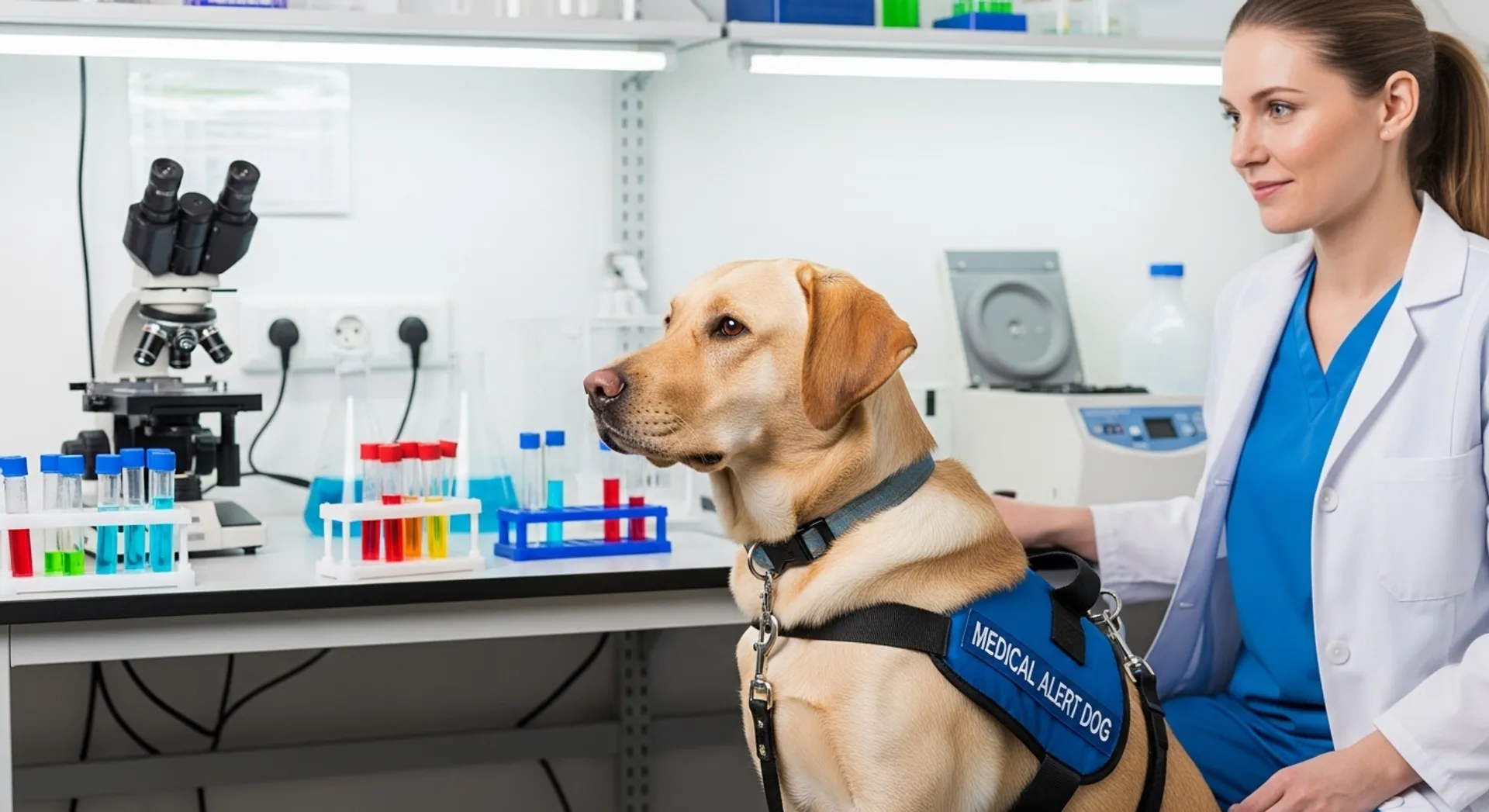
Medical detection dogs are transforming healthcare by using their extraordinary sense of smell to identify diseases at their earliest, most treatable stages. These specially trained canines can detect volatile organic compounds associated with conditions like cancer, diabetes, and infectious diseases with remarkable accuracy. As we advance through 2025, the role of biomedical detection dogs in disease screening has expanded beyond experimental research into practical clinical applications that save lives every day.
Understanding how these incredible animals work, what makes them successful, and how they’re trained opens up new possibilities for both the medical community and dog training professionals. Whether you’re a handler interested in medical detection work, a healthcare provider exploring innovative screening methods, or simply fascinated by canine capabilities, this comprehensive guide will walk you through everything you need to know about medical detection dogs.
What Are Medical Detection Dogs?
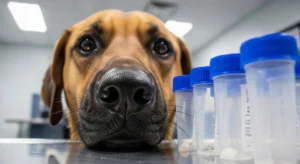
Medical detection dogs are highly trained canines that use their olfactory abilities to identify specific scents associated with human diseases or medical conditions. Unlike traditional scent detection work that focuses on narcotics or explosives, medical detection dogs are trained to recognize the unique chemical signatures that diseases create in human breath, urine, sweat, or other bodily samples.
These dogs don’t just detect a single scent — they’re identifying complex patterns of volatile organic compounds that change when someone develops a particular condition. Recent studies from 2025 have shown that dogs can be trained to detect diseases with sensitivity levels that rival or exceed many laboratory diagnostic tests, making them valuable partners in early disease screening programs.
The science behind medical detection is fascinating. When the human body fights disease or undergoes metabolic changes, it produces specific chemical compounds that are released through breath, skin, and bodily fluids. Dogs, with their approximately 300 million scent receptors compared to our mere 6 million, can detect these molecular changes at concentrations as low as parts per trillion.
The Science of Canine Disease Detection
Understanding why dogs excel at medical detection requires looking at both their biological advantages and recent scientific discoveries. Research published in 2025 has revealed critical insights into what makes certain dogs particularly successful at this specialized work.
Personality Matters: Optimistic vs. Pessimistic Dogs
Groundbreaking research from the University of Bristol has shown that a dog’s personality significantly impacts their detection performance. Dogs displaying more optimistic responses in behavioral tests — those that eagerly approach uncertain situations — tend to demonstrate higher overall ability in detection tasks. These confident, food-oriented, and playful dogs score consistently higher when rated by their trainers.
Interestingly, among fully trained medical detection dogs, those with more pessimistic tendencies achieve higher specificity in scent detection tasks. This means they’re less likely to produce false positives, making them invaluable for situations where accuracy is paramount. Understanding these personality differences helps trainers select and support the right dogs for specific medical detection roles.
How Dogs Learn to Detect Disease
The training process for medical detection dogs relies on classical conditioning and positive reinforcement. Dogs are first introduced to samples from patients with confirmed diagnoses, learning to associate the disease scent with rewards. Through thousands of repetitions, they develop the ability to discriminate between positive and negative samples with remarkable precision.
Modern training protocols incorporate several key elements. First, dogs are exposed to a diverse range of samples representing different stages of disease, patient demographics, and concurrent conditions. This ensures they’re detecting the disease itself rather than confounding factors like medications or diet. Second, trainers use double-blind testing procedures where neither the handler nor the dog knows which samples are positive, eliminating unconscious cuing.
Applications in Modern Healthcare
Medical detection dogs are being deployed across an expanding range of healthcare applications, with new uses emerging as research validates their effectiveness.
Cancer Detection
Dogs have demonstrated the ability to detect multiple cancer types, including prostate, breast, lung, ovarian, and colorectal cancers. Some programs report detection rates exceeding 90% accuracy. The dogs can identify cancers at earlier stages than many conventional screening methods, potentially catching disease when treatment is most effective.
Organizations like Medical Detection Dogs UK have pioneered cancer detection programs, training dogs to screen urine and breath samples from patients. While not replacing traditional diagnostics, these dogs serve as valuable first-tier screening tools, especially in resource-limited settings or for populations with limited access to expensive imaging technology.
Infectious Disease Screening
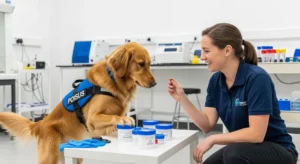
The COVID-19 pandemic accelerated research into using dogs for infectious disease detection. Studies conducted in 2025 confirmed that trained dogs can detect SARS-CoV-2 infections from sweat samples with sensitivity and specificity comparable to rapid antigen tests — but much faster. At transportation hubs and large events, detection dogs can screen hundreds of people per hour, providing non-invasive, rapid testing.
Public acceptance surveys show that 70-72% of people prefer canine testing methods over traditional diagnostic tests for mass screening scenarios. The dogs are particularly effective in public, anonymous settings like airports and concert venues, where their deployment doesn’t feel intrusive to participants.
Metabolic and Chronic Condition Monitoring
Beyond disease detection, medical alert dogs assist individuals with chronic conditions like diabetes and epilepsy. These service dogs live with their handlers and alert them to dangerous changes in blood sugar levels or warn of impending seizures, sometimes minutes before the person experiences symptoms. This early warning system can be lifesaving, allowing individuals to take preventive action.
Recent advances in training have expanded capabilities to include detection of other metabolic disorders and even mental health conditions. Some dogs are being trained to recognize the chemical changes associated with anxiety attacks or post-traumatic stress episodes, providing therapeutic intervention before symptoms escalate.
Training Your Dog for Medical Detection Work
While professional medical detection programs require extensive resources and expertise, the foundational training principles can be applied by dedicated handlers interested in this specialized field.
Essential Prerequisites
Before beginning medical detection training, dogs should have solid foundational skills. They need strong basic scent discrimination abilities, which can be developed through general nose work and tracking exercises. The dog should be highly motivated by rewards — whether food, toys, or play — and maintain focus even in distracting environments.
Physical health is crucial. Medical detection work isn’t physically demanding in the way that search and rescue can be, but dogs need good overall health, particularly regarding their olfactory system. Regular veterinary checkups ensure the dog’s nose is functioning optimally and no underlying health issues interfere with their detection abilities.
Building Detection Skills
Medical detection training typically begins with scent introduction and discrimination exercises. Dogs learn to identify target scents among distractors through systematic training sessions. Each successful detection receives immediate positive reinforcement, creating a strong association between finding the target scent and receiving rewards.
The training progresses through stages of increasing difficulty. Initial exercises might use strong scent concentrations in controlled environments, gradually moving to more diluted samples and real-world settings. Dogs must learn to maintain their indication behavior — whether sitting, pawing, or lying down — consistently regardless of distractions.
Working with established organizations like Working Dogs for Conservation or specialized medical detection training centers provides access to proper sample handling protocols, biosafety measures, and validated training methodologies that ensure ethical and effective programs.
The Future of Medical Detection Dogs
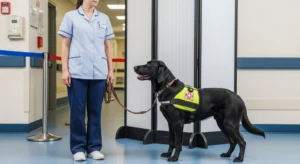
As we progress through 2025 and beyond, the integration of technology with canine detection capabilities promises exciting developments. Researchers are developing wearable sensors that monitor dogs’ physiological responses during detection work, creating objective measurements of their alerts. These brain-computer interfaces and biometric monitoring systems could enhance communication between dogs and handlers, reducing subjective interpretation.
Artificial intelligence is being incorporated into training programs, analyzing patterns in successful detections to optimize training protocols. Machine learning algorithms can identify subtle behavioral cues that indicate a dog is working at peak performance versus showing signs of fatigue or uncertainty.
The regulatory landscape is also evolving. Efforts are underway in multiple countries to establish standardized certification processes for medical detection dogs, similar to those for service animals. This standardization would increase acceptance in clinical settings and ensure consistent quality across programs.
Challenges and Considerations
Despite their impressive capabilities, medical detection dogs face challenges in widespread clinical adoption. Sample standardization remains a significant concern — ensuring dogs receive consistent, uncontaminated training samples requires rigorous protocols and quality control measures.
Cultural acceptance varies globally, with some regions showing greater openness to canine-assisted medical screening than others. Education efforts targeting healthcare providers and the general public are essential for increasing understanding and acceptance of this innovative approach.
The scalability of medical detection dog programs also presents challenges. Training each dog requires substantial time investment — often 6-12 months or longer — and ongoing maintenance training throughout their working lives. The number of samples a dog can process daily is limited, making them most effective as first-tier screening tools rather than replacements for laboratory diagnostics.
Getting Started with Medical Detection Training
For handlers and trainers interested in entering the medical detection field, several pathways exist. Connecting with established programs offers mentorship opportunities and access to proper training resources. Organizations often seek handlers willing to work with rescue dogs, as many successful detection dogs come from shelter backgrounds.
Formal education in canine behavior, veterinary science, or related fields strengthens your foundation for this specialized work. Understanding canine learning theory, olfaction science, and biosafety protocols ensures you can train effectively and ethically.
The field of medical detection dogs represents a remarkable convergence of canine capabilities and human healthcare needs. As research continues validating their effectiveness and training methods become more refined, these four-legged medical professionals will play an increasingly important role in early disease detection and improved patient outcomes. Whether you’re training the next generation of medical detection dogs or simply supporting this innovative approach to healthcare, you’re part of a movement that’s literally saving lives one sniff at a time.