
What Is K9 Nose Work — and Why Is Everyone Talking About It?
If you have spent any time in the dog training world recently, you have likely heard the phrase K9 nose work more times than you can count. Classes are filling up, competitions are selling out, and dog owners who never thought of themselves as “sport people” are suddenly showing up on weekends with their dogs, hunting for hidden scents.
So what exactly is it — and why is it so popular?
K9 nose work is a scent-based activity and competitive dog sport that was developed in 2006 by three professional detection dog trainers — Ron Gaunt, Amy Herot, and Jill-Marie O’Brien. Their goal was to take the same training techniques used to develop elite working dogs and make them accessible to any dog and any owner, regardless of breed, age, or prior training experience. The result became one of the fastest-growing dog sports in the United States.
At its core, nose work teaches your dog to use their extraordinary sense of smell to locate a specific hidden scent, and then communicate that location to you. It mirrors exactly what professional scent-detection dogs do in the field — from drug detection to search and rescue — but reimagined as a game you can play at home, in a park, or at a formal competition.
And the best part? Your dog was born ready for it.
Why K9 Nose Work Is Perfect for Every Dog
One of the most remarkable things about nose work is its inclusivity. Unlike agility, flyball, or dock diving — sports that favour young, high-energy, physically agile dogs — nose work has no such requirements. It is genuinely open to all.
Any Breed Can Do It
Whether you have a border collie, a retired greyhound, a French bulldog, or a mystery mix from the shelter, nose work is a sport your dog can not only participate in but genuinely excel at. The search is led entirely by the dog’s nose — not speed, not size, not pedigree. A small terrier can outperform a working shepherd on any given day if their nose is sharper and their motivation is higher.
Any Age Can Participate
Puppies as young as a few months old can begin the foundational games of nose work. Senior dogs — including those with limited mobility, vision loss, or hearing impairment — thrive in the sport because it asks nothing of their bodies beyond slow, deliberate sniffing. Many handlers report that nose work gave their aging dogs a renewed sense of purpose and mental energy.
It Is Ideal for Anxious and Reactive Dogs
Dogs with anxiety, reactivity, or fear-based behaviors often struggle in traditional group training environments. Nose work is different. In class settings and competitions, dogs work one at a time and never interact with other dogs directly. This structure makes nose work one of the safest and most confidence-building activities available for dogs who find typical social settings overwhelming.
The Real Benefits of Nose Work Beyond the Sport
 Even if competition never interests you, nose work delivers benefits that make it worth incorporating into your dog’s routine. Understanding just how powerful your dog’s sense of smell truly is makes it easy to see why engaging that sense has such a profound effect on their overall wellbeing.
Deep Mental Stimulation
Twenty minutes of focused nose work can tire a dog as effectively as an hour of physical exercise. The concentration required to isolate a specific scent from a complex environment taxes the brain in ways that a simple walk simply cannot. For high-drive dogs who are difficult to settle, this mental fatigue is genuinely transformative.
Confidence Building
Nose work is built entirely on positive reinforcement. Every correct find is rewarded. There is no correction, no pressure, and no failure in the way that traditional obedience training can sometimes feel. Dogs that consistently succeed at finding hidden targets develop real confidence — and that confidence often translates into calmer, more balanced behavior across all areas of their lives.
A Stronger Bond Between Dog and Handler
Nose work fundamentally changes the dynamic between a dog and their owner. Because the dog leads the search and the handler follows, the human learns to trust their dog’s nose rather than directing the outcome. This shift — letting the dog be the expert — deepens the relationship in a way that command-based training rarely achieves.
How Nose Work Training Actually Works
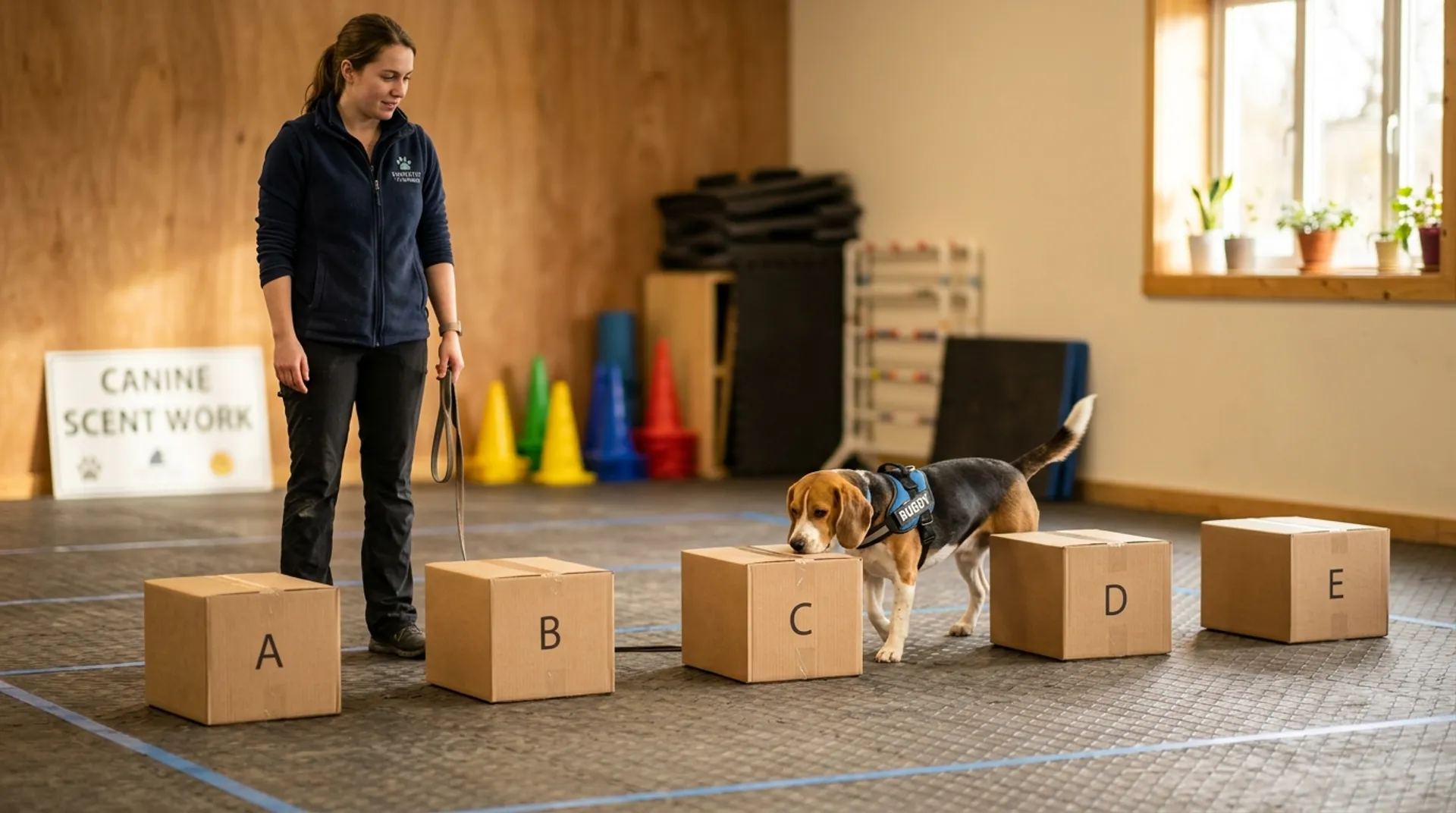
The training progression in K9 nose work follows a clear, step-by-step structure. You do not need any equipment at the start — just a handful of your dog’s favorite treats or a beloved toy, and a few cardboard boxes.
Step 1 — Teaching the Value of the Box
The very first lesson involves nothing more than placing treats inside one of several boxes arranged on the floor. You let your dog explore freely. When they investigate the correct box and find the reward, they immediately understand that searching boxes is a highly profitable game. Most dogs catch on within minutes. The goal is simple: make the hunt irresistible.
Step 2 — Introducing a Target Odor
Once your dog is confidently and enthusiastically searching boxes for treats, a target odor is introduced. In both NACSW K9 Nose Work and AKC Scent Work, the primary target odors are essential oils — birch, anise, clove, and cypress. A tiny amount of the oil is placed on a cotton swab inside a perforated tin or tube, and that container is hidden among others. The dog learns to identify and alert on that specific odor rather than just hunting randomly for food.
Step 3 — Expanding the Search Area
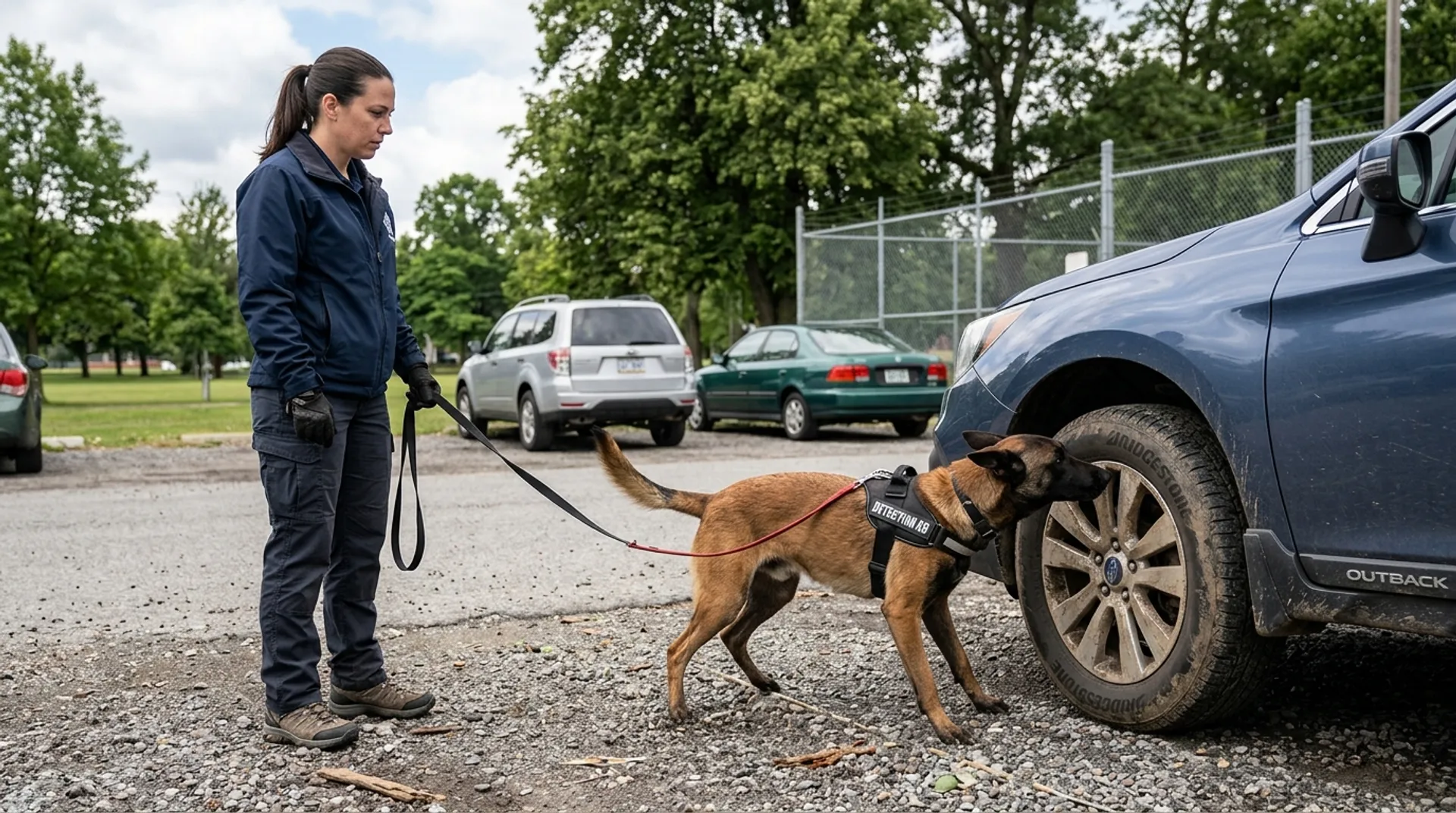
As your dog becomes reliable on the target odor in a simple box search, the game expands. Hides move from boxes to furniture, baseboards, vehicles, outdoor spaces, and eventually buried locations. Each new environment introduces new airflow patterns, distractions, and scent challenges — keeping the game fresh and progressively more stimulating for the dog.
Step 4 — The Alert
Dogs are trained to communicate when they have found the source of the target odor — not just where the scent is drifting, but the exact hide location. Alerts vary by dog and training method: some dogs sit, some stare, some paw at the surface. What matters is consistency — your dog gives a clear, repeatable signal, and you learn to read it accurately. This handler-dog communication is at the heart of what makes nose work such a rewarding partnership sport.
Understanding the Competition Structure
 If you decide to take your nose work training into the competitive arena, two major organizations govern the sport in the United States, each with its own structure and culture.
NACSW — The Original Nose Work Organization
The National Association of Canine Scent Work (NACSW) is the founding and official sanctioning body for K9 Nose Work. Before competing at a trial, teams must pass an Odor Recognition Test (ORT) — a prerequisite that confirms the dog can reliably identify each target odor individually. Trials then test dogs across four search elements: containers, interiors, exteriors, and vehicles. The titling progression runs from NW1 through NW3, then to Elite levels and ultimately to Elite Champion. NACSW trials are known for their strict dog-separation protocols, making them an excellent entry point for reactive or anxious dogs.
AKC Scent Work — The Accessible Alternative
AKC Scent Work launched in 2017 and has grown rapidly since its inaugural trial in Wilmington, Ohio. It uses four of the same essential oil target odors — birch, anise, clove, and cypress — and tests dogs across containers, interiors, exteriors, and buried hides. Unlike NACSW, there is no prerequisite ORT required before entering a trial. AKC Scent Work also offers a unique Handler Discrimination Division, where the dog searches specifically for their handler’s scent among distractors — a beautiful demonstration of the personal bond between dog and owner.
How to Get Started With Nose Work Today
Getting started does not require expensive equipment or a formal class — though both can accelerate your progress. Here is a simple path forward:
Start at Home With Boxes
Gather six to eight cardboard boxes of similar size. Place a high-value treat inside just one of them. Let your dog explore all the boxes freely. The moment they investigate the correct box, reward generously with additional treats and enthusiastic praise. Repeat this several times per session, rotating which box holds the reward. Within a few sessions, most dogs are eagerly and systematically searching every box with purpose. This is your dog’s natural scenting ability activating — you are simply channeling what they already do instinctively.
Find a Certified Instructor
Working with a Certified Nose Work Instructor (CNWI) — certified through NACSW — is the most reliable way to develop solid foundational skills and avoid common handler errors that slow progress. Certified instructors understand both the sport’s competition requirements and the behavioral needs of individual dogs. You can locate a certified instructor near you through the K9 Nose Work education website.
Keep Sessions Short and Joyful
Nose work sessions should never feel like work to your dog. Five to ten minutes of high-quality searching is far more valuable than a long, unfocused session. End every search on a successful find. Keep the energy high, the rewards generous, and the game moving. The moment your dog looks uncertain or disengaged, end the session and return tomorrow. Consistency and positivity build the drive that carries dogs from beginner boxes all the way to Elite Champion titles.
The Bigger Picture — Why This Matters
Nose work is far more than a hobby. It is a window into the extraordinary capabilities that every dog carries in their nose — capabilities that, when unlocked, transform the relationship between dogs and the people who share their lives. The same instinct that allows a trained detection dog to locate a missing person deep in a wilderness search lives inside your dog right now, waiting to be engaged.
Whether you are looking for a way to tire out a high-drive dog, rebuild confidence in a fearful rescue, deepen your bond with a senior companion, or step into the competitive arena for the first time — K9 nose work delivers all of it. No other sport asks so little of the handler and unlocks so much of the dog.
Your dog’s nose knows the way. You just need to follow it.