
The Unveiling of Canine Geniuses
Have you ever looked at your dog, mid-conversation, and thought, “Are you actually listening to me?” It’s a question that has crossed the mind of nearly every dog owner. We talk to our canine companions, narrate our days, and sometimes, we even share our secrets. But what if they’re understanding more than we ever imagined? A surprising new study suggests that for some dogs, this isn’t just wishful thinking. Researchers have discovered that a unique group of canines, dubbed “Gifted Word Learners,” can learn new words simply by eavesdropping on human conversations, a remarkable skill once thought to be reserved for young children. This article delves into the fascinating world of canine cognition, exploring what makes these dogs so special and what their incredible abilities mean for the future of the human-canine bond.
What Are “Gifted Word Learner” Dogs?

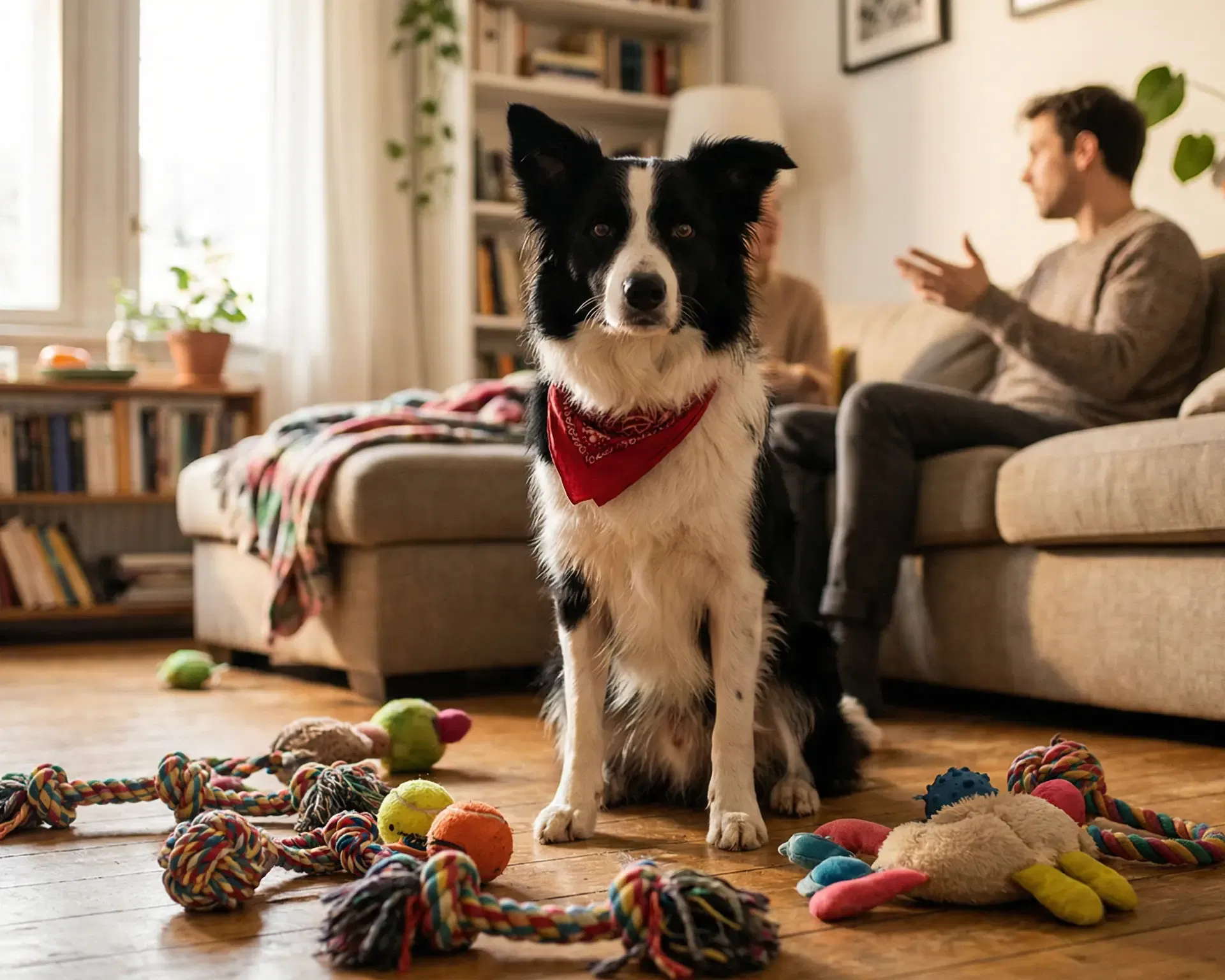
The term “Gifted Word Learner” (GWL) refers to dogs that demonstrate an extraordinary talent for learning and remembering the names of objects. While the average dog might learn a handful of commands and the names of a few favorite toys, GWLs can build a vocabulary of dozens, sometimes even hundreds, of words. This isn’t a trait confined to a single breed; while many of the identified GWLs are Border Collies — a breed renowned for its intelligence — this genius has also been found in German Shepherds, Labradors, and a variety of other breeds and mixes. It’s a rare and special ability that points to a deeper cognitive capacity than previously understood in the canine world. These dogs aren’t just smart; they are true outliers, providing a unique window into the evolution of learning and language.
The Groundbreaking Study
The recent study that brought these canine geniuses into the spotlight was conducted by researchers at the Eötvös Loránd University in Hungary and published in the prestigious journal Science. The experiment was designed to test how these gifted dogs acquire new vocabulary. In one scenario, owners directly taught their dogs the names of two new toys through play and repetition. In a second, more telling scenario, the dogs simply overheard their owners talking to each other about the new toys, without any direct interaction. The results were astonishing. The majority of the gifted dogs successfully learned the names of the new toys in both conditions, retrieving the correct toy when asked. This ability to learn through passive observation, or eavesdropping, is functionally similar to how human infants begin to acquire language at around 18 months of age, a key milestone in child development.
How Do These Genius Dogs Learn?
The discovery that dogs can learn by eavesdropping opens up a whole new set of questions about how their minds work. It’s not just about a good memory; it’s about a sophisticated form of social learning that allows them to extract meaningful information from the world around them, even when they aren’t the center of attention. This finding challenges our traditional views of dog training and communication.
Eavesdropping A Social Learning Superpower
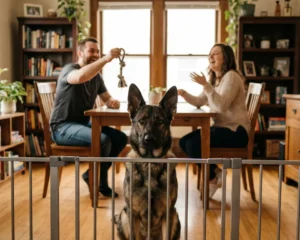
Social learning is a powerful tool in the animal kingdom, but learning through eavesdropping on a different species is exceptionally rare. This ability suggests that these gifted dogs have a highly attuned sensitivity to human communicative cues. They are not just hearing words; they are likely paying close attention to context, tone, and intention, piecing together the meaning of a new word from the conversational puzzle. This parallels the process in human toddlers, who use social cues from adults to navigate the complex task of language acquisition. The presence of this skill in dogs suggests that the cognitive foundations for this type of learning may be more ancient and widespread than previously believed, predating the evolution of human language itself.
Beyond Simple Memorization
To ensure the dogs weren’t simply associating the sight of a toy with a sound, the researchers added another layer to their experiment. In a third test, the owners would name the new toy only after it had been placed out of sight in a bucket. Even without the visual cue, the majority of the dogs were still able to correctly identify and retrieve the new toy later. This demonstrates a deeper level of understanding — a true mapping of a word to a mental representation of an object. It’s not just a party trick; it’s a complex cognitive feat. Furthermore, the study found that these dogs retained the names of the new toys for at least two weeks, indicating a capacity for long-term memory and robust learning. This flexible and durable learning ability is what makes these dogs’ minds so extraordinary.
What This Means for Dog Owners and Trainers
The implications of this research extend far beyond the laboratory. For dog owners, trainers, and enthusiasts, these findings offer a new lens through which to view our canine companions. It reinforces the importance of mindful communication and highlights the incredible potential that lies within every dog. This new understanding can enrich our training methods and deepen the powerful bond we share with them.
Implications for the Human-Canine Bond
This study is a beautiful reminder that our dogs are always listening, always learning, and always connected to our world. It encourages us to be more conscious of the language we use around them and to appreciate the silent, observant intelligence they possess. Knowing that our words can have a lasting impact, even when not directed at them, can transform our daily interactions and foster a deeper, more respectful partnership. It validates the feeling that many owners have — that their dog truly understands them on a profound level. This research gives us a scientific basis for that feeling and strengthens the human-canine bond that is at the heart of our mission.
A New Perspective on Dog Training
For those involved in the world of dog training, especially for complex tasks like scent work, these findings are particularly exciting. The cognitive abilities demonstrated by Gifted Word Learner dogs are the very same skills that make a dog an exceptional working partner. The ability to learn flexibly, retain information, and pay close attention to human cues is the foundation of all advanced training. This research supports the idea that dogs are not just being conditioned; they are actively thinking and problem-solving. It underscores the potential within every dog to perform incredible tasks, from the life-saving work of medical detection to the intricate science of scent detection. It’s a testament to the power of a dog’s nose and, as we now know, its remarkable mind.
In conclusion, the discovery of Gifted Word Learner dogs and their unique ability to learn through eavesdropping marks a significant milestone in our understanding of canine intelligence. This research, elegantly detailed in the journal Science, shows that some dogs possess social learning skills that are functionally parallel to those of human toddlers. While this extraordinary talent may be rare, it opens a new and exciting window into the minds of all dogs, revealing a depth of cognition that we are only just beginning to appreciate. It’s a powerful reminder that the dogs we share our lives with hold a genius all their own, waiting to be discovered.